
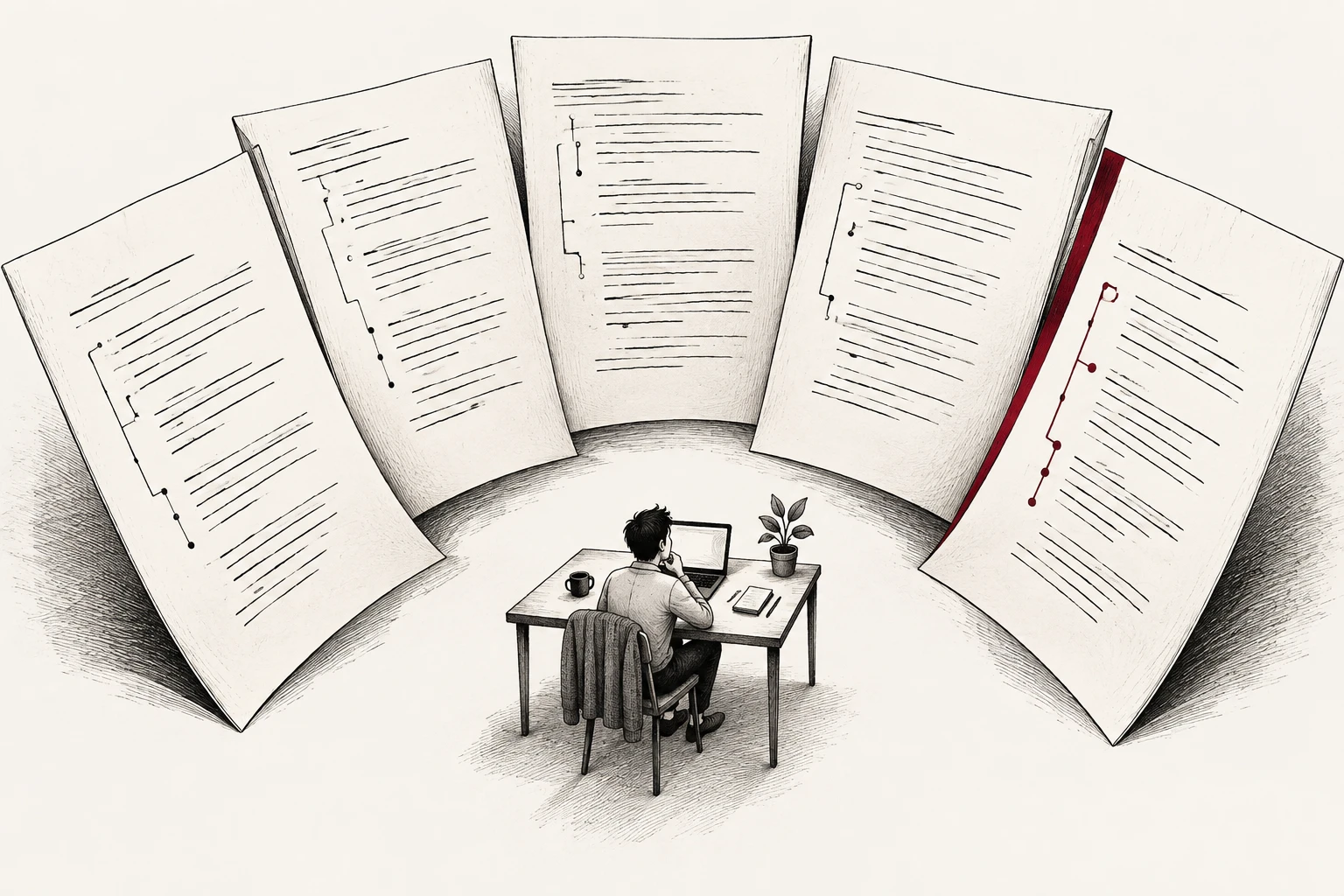
Fifteen pull requests are waiting on me. A normal Tuesday, and already more than I can review properly.
Behind each one is someone waiting for an answer. Maybe they're blocked. Maybe they've moved on and will have to pick the whole thing up again when I finally reply. Meanwhile, their branch keeps drifting from main.
It got to a point where there were so many PRs that I started asking which ones I had the attention for that day, rather than whether the changes were good. I wasn't happy with what that meant for the people asking.
Four answers that didn't quite work
So I tried a few ways to get through the queue, and considered one more.
- Skim and approve. I've approved changes I hadn't properly read. It cleared my queue, but left someone else carrying the risk.
- Leave it for tomorrow. More time for me, another day waiting for the author. Their branch kept drifting while I put it off.
- Ask Claude each time. Useful reviews, but fifteen PRs meant fifteen worktrees, fifteen prompts and fifteen waits. This nearly worked; I wanted to automate the starting.
- Ask authors to review their own code first. I considered it, but it wouldn't help someone halfway through a change asking, is this even the right direction? I still wanted to be the person they could ask.
So I stepped back. If I could rebuild this whole workflow from scratch, what would I want it to look like?
I'd want a draft waiting when I sit down, and a chance to check it before anyone else sees it. A wrong finding on my laptop is easy to delete. On a PR, it becomes someone else's work to refute.
So I built Cerber.
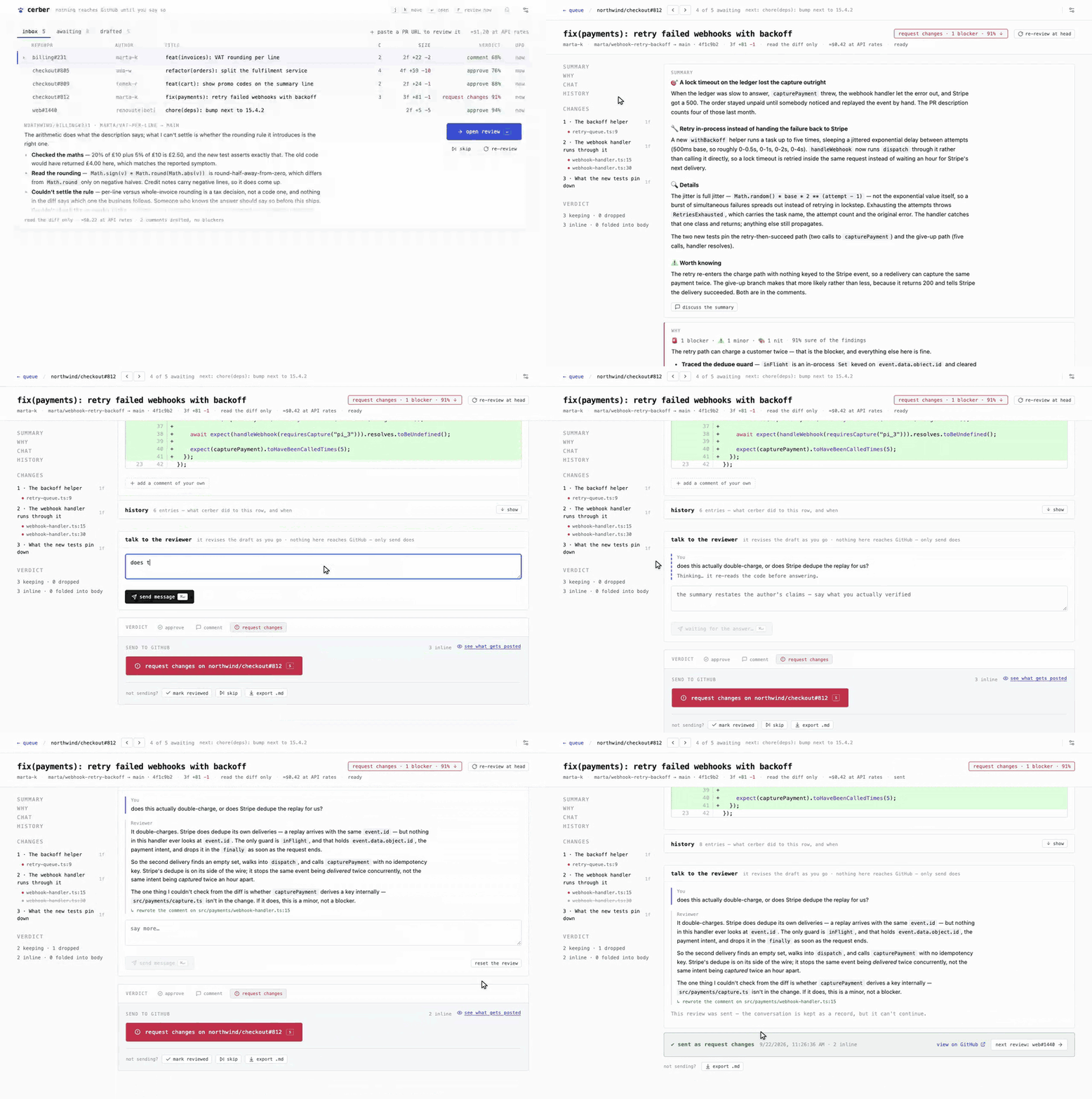
A draft waiting for me
cerber serve watches GitHub for PRs where my review is requested and runs
Claude Code over each one. I open a local web UI to find a summary, a walkthrough
of the change, draft inline comments and a verdict.
Then I do the part I wanted more time for: check the reasoning. I rewrite comments I half agree with, delete ones I don't, and ask questions where I'm unsure. When I'm happy with the review, I press Send. It goes out under my name, so I need to be willing to stand behind it.
By default, a review stays a draft until I press Send. There's an opt-in auto-send mode for approvals at or above a chosen confidence threshold; comment-only reviews and requests for changes still need a human click.
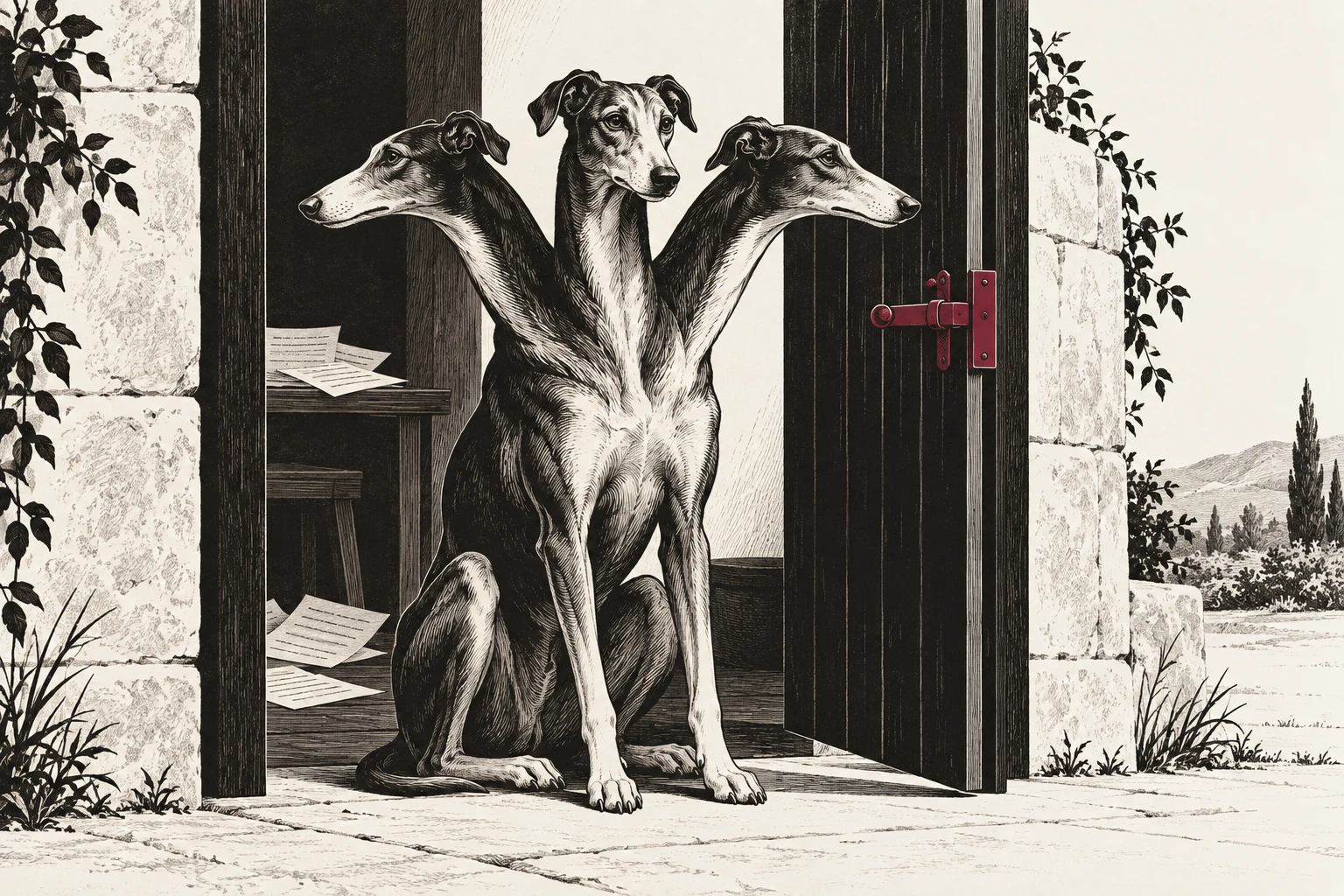
I named it after Cerberus, the three-headed guard dog. In this case, the job is keeping draft reviews from escaping to GitHub.
Before you try it
- Code goes to Anthropic. Cerber runs Claude Code on your machine. Drafts and state stay local; the model doesn't.
- You need a paid Claude Code plan. It uses your existing login and usage. There's no API-key option.
- GitHub only. It watches PRs where your review has been requested.
- No trust by default: reviews can't execute commands on your machine unless you explicitly trust their authors, individually or through GitHub teams or organizations.
Cerber is MIT-licensed and available on npm as @fullstackhouse/cerber.
Get it on GitHub.
If you're also the person reviews pile up behind, I'd like to hear what's working for you.
Bring the napkin sketch.
Thirty minutes with a full-stack engineer, plus a short written report that's yours to keep.
30 minGoogle Calendarno sales deck
Prefer to write? Send us a message →